Icl3 Molecular Geometry
Molecular Geometry for ICl3? ۔
T-shaped.
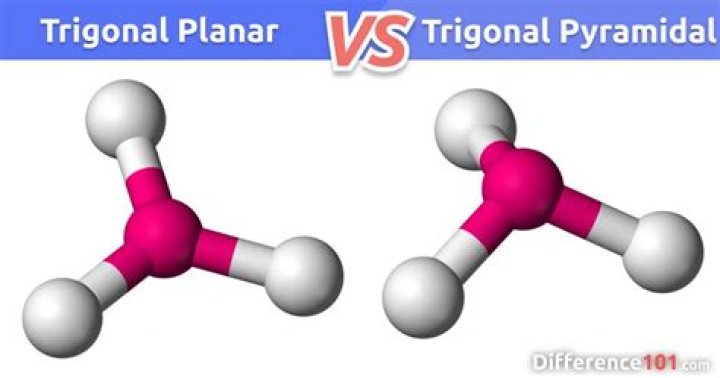
When chlorine binds to iodine, it adds 3 electrons to the existing 7 chlorine, giving it a tenth of a pair of electrons, giving it 5 pairs (2 inbound). The most stable configuration can produce a pair when the pairs are as far apart as possible. This is an electronic geometry triangular pyramidal, which can separate three pairs from 120 degrees and the other two from 90 degrees. However, the inbound electron pair requires more and therefore will be more stable if it can expand further. This means that two unrelated pairs are in a position to be 120 degrees apart, with one connected pair taking control of the third. The other 2 sticky pairs are at an angle of five degrees and 90 degrees below this level. It's hard to explain and a picture is more valuable:
...
Look at the shape
I know you are asking about molecular geometry, but understanding electron geometry is important to understand why molecules exist.
ICL 3. Molecular geometry
Atoms I and Cl each have 7 valence electrons, making a total of 28 valence electrons for all atoms in the ICl3 molecule.
The atom will be the central atom. 3 Total atoms are attached to the I atom and there is a covalent bond between the bond I and the Cl atom. It has 24 out of 28 electrons. The remaining 4 electrons are placed around atom I.
The molecule IC13 will have a T-shaped molecular geometry.
The geometry of the electron will be triangular.
This page can help you.
D:
Molecular Geometry for ICl3?
Lewis structure of icl3.
Icl3 Molecular Geometry
Icl3 Molecular Geometry
Molecular Geometry for ICl3? 3
T-shaped.
When chlorine binds to iodine, it adds 3 chlorine electrons to the existing 7, giving you one tenth of the electrons, giving you 5 pairs (2 free). The most stable configuration in which tse pairs can now be formed is when the pairs are separated as much as possible. This electronic geometry is a triangular pyramid, allowing three pairs to be 120 degrees apart and the other two to be 90 degrees apart. However, a pair of non-binding electrons requires more and will be more stable if it can expand further. This means that two unrelated pairs are positioned so that they are 120 degrees apart, one connected pair occupying the third. The other 2 sticky pairs are five at a 90 degree angle and below that level. It's hard to explain and a picture is too valuable:
...
Look at the shape
I know you are asking about molecular geometry, but understanding electron geometry is important to understand why molecules are like that.
Icl3 Molecular Geometry
Icl3 Molecular Geometry
Atoms I and Cl each have 7 valence electrons, making a total of 28 valence electrons for all the atoms in the ICl3 molecule.
Atom I will be the central atom. 3 Cl atoms are attached to the I atom and the bond is a covalent bond between I and Cl atoms. It has 24 out of 28 electrons. The other 4 electrons are placed around atom I.
The iCl3 molecule will have a T-shaped molecular geometry.
The geometry of the electron will be that of a pyramid.